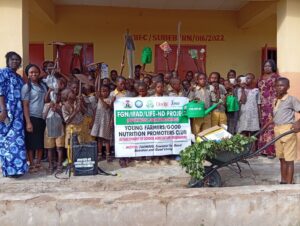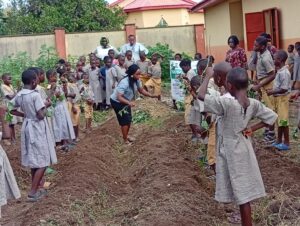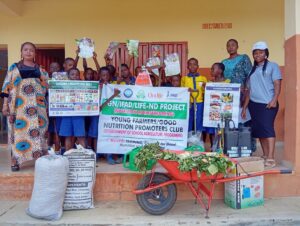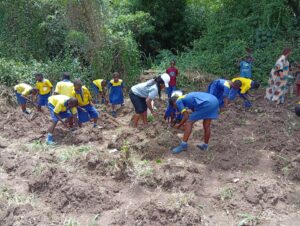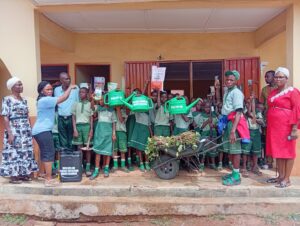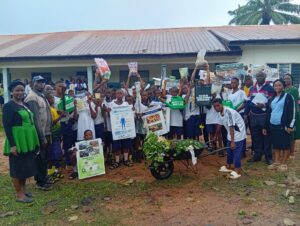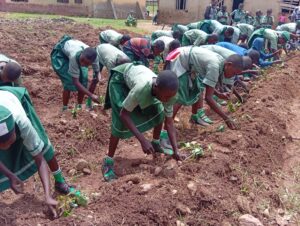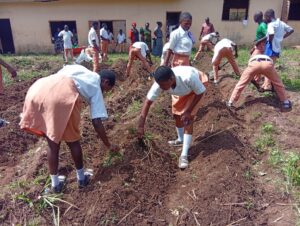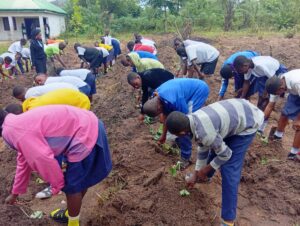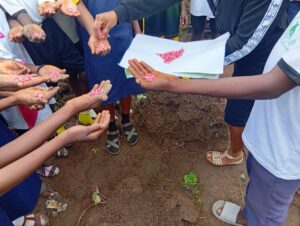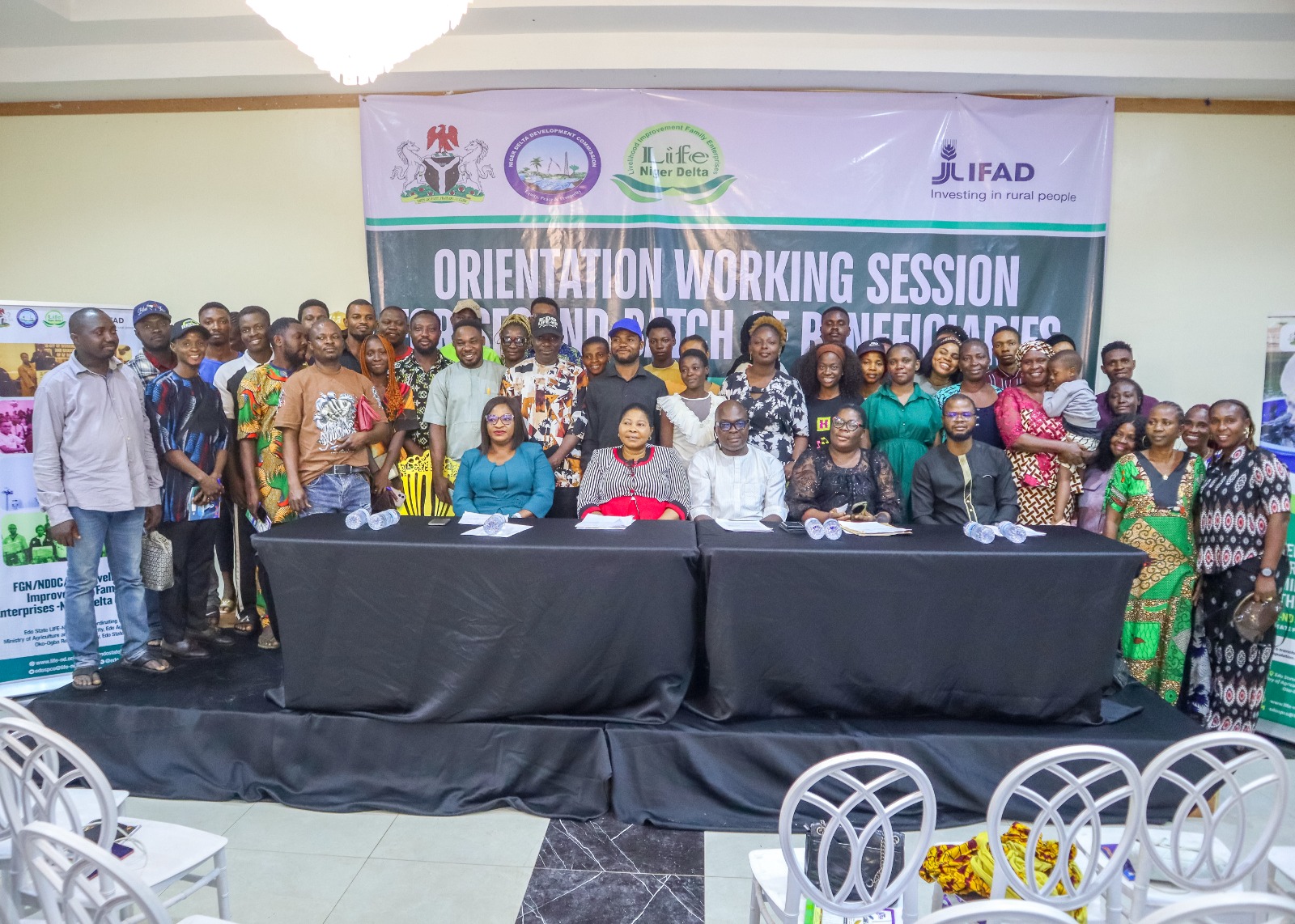
No fewer than 1,050 households in Ondo State which includes pupils / students, teachers and local farmers have been reached, trained and provided with improved seeds of fruits, vegetables and some bio-fortified crops in their gardens/ farms to curb food and nutrition insecurity in the rural communities.
Medically, research has shown that, malnourished children often suffer from growth retardation due to poor diet intake. The deficiency in calories, proteins, essential vitamins and minerals in their diets make children and teenagers susceptible to delayed mental development, poor school performance, reduced intellectual capacity, weakened immune system, chronic diseases, increased risk of infection and mortality.
It is against these backdrops that prompted LIFE -ND to conceive School Agricultural Programme (SAP) as a strategy employed in Nutrition Mainstreaming Areas of the Project to sensitize and train School children in the establishment of school gardens to grow some fruits, vegetables and bio-fortified crops.
Back then in the 19s and early 20s, the idea of school garden is a known phenomenon to pupils and students unlike today where everyone has become civilized. Pupils and students both in the primary and secondary schools had school gardens, which is the practical session of agricultural science as a subject, where the school children actively participated in real farming under the close supervision of Agricultural teachers. The intent of the school gardens was to awaken the consciousness of pupils and students in farming and instill in them that producing what we eat is the best way to achieve survival and food security.
The LIFE -ND school gardens initiative is in 3 phases which are:
- Awareness creation to school authority and Pupils/students.
- Establishment of young farmers/ good nutrition promoters’ clubs.
- Provision of inputs for establishment of school gardens.
In particular, this programme has sensitized the pupils/students, teachers, parents and local farmers on how to improve their nutrition, by including crops that contains nutrients often deficient in their diets to what they grow in their gardens/farms, thus increasing availability, accessibility, utilization and sustainability of NUTRITIOUS crops.
Previously, about twenty schools in 20 communities have been reached, school gardens were established and additional 5 schools was recently covered. The schools were provided with improved seeds such as pro-vitamin A maize, watermelon, cucumber, okro, amaranth, pro- vitamin A cassava stems and orange fleshed sweet es (OFSP) vines for planting.
In the same vein, farm inputs such as cutlasses, files, hoes, spades, wheelbarrows, watering cans, knapsack sprayers, as well as agro-chemicals and organic manures were provided for the pupils and students to making their farming experiences seamless and to achieve bumper harvest.
The beauty of this initiative is the inclusion of extension agents who constantly train and supervise the pupils/students in schools where gardens have been established. Also, school teachers were included to ensure that the school children actually maintained their farms to enhance good yield.
The entire school communities were full of joy and lauded the LIFE -ND PROJECT for supporting their children to grow varieties of nutritious crops for consumption and the excess for sale on a sustainable basis to reduce the menace of malnutrition.
The Selected Schools Include:
1) Owena Community Grammar School, Owena, Ondo East LGA
2) St. Andrews Anglican Primary School, Ayede-ogbese, Akure North LGA.
3) Oludaye Grammar School, Oke-oba, Akoko S/W LGA
4) St. John Anglican Primary School, Iyere, Owo LGA.
5) St. Barnabas Primary School, Gberiwojo, Idanre LGA.
Below are pictures of the activities across the selected schools: